
UAE local guide
The cabin you sit in every day is a small ecosystem
Between Dubai’s summer humidity, the fine desert dust that finds its way through every vent, and the quick lunches eaten behind the wheel in traffic on Sheikh Zayed Road, the inside of a UAE car sees a lot. Interior detailing is not about a nice smell for the weekend. It is about pulling out what has been living in the fabric, the vents, and the leather for months.
Most drivers assume a vacuum and a wipe-down is enough. It is not. Studies of vehicle cabins have repeatedly found bacterial loads on steering wheels and gear shifts that rival, and sometimes exceed, what you find on public toilet seats. A well known bacterial swab study by researchers at Aston University found hundreds of bacterial strains inside average family cars, with the boot and driver seat carrying the heaviest counts.
Add to that fungi that thrive in damp AC evaporators, dust mites that colonise fabric seats, food residue from drive-thru meals, and pet hair woven into the carpet fibres, and you start to see why a real auto interior detailing session is a health decision, not a cosmetic one.
What’s actually in there
Bacteria, fungi, allergens, and everything the vacuum misses
A typical UAE car cabin holds four categories of unwanted guests. Understanding them helps you understand why a quick wash at the petrol station does not touch the real problem.
- Bacteriamost heavily on the steering wheel, gear knob, seatbelt buckle, and cup holders where drinks spill.
- Fungi and mouldwhich grow inside the AC evaporator and duct network when humidity condenses and never fully dries.
- Viruses and allergensdeposited by passengers and children, then trapped in soft surfaces where they can survive for hours or days.
- Dust mites and pet hairembedded deep in fabric seats, headliners, and carpet padding where a household vacuum cannot reach.
Food contamination is its own category. Every dropped date, spilled karak, or forgotten shawarma wrapper feeds bacteria and attracts insects. In the heat of a parked car in Sharjah in July, that biology accelerates fast. Interior temperatures above 60 degrees Celsius do kill some organisms, but they also bake residues deeper into fibres and leather pores.
Health impact
Why this matters for kids and asthma sufferers
Children breathe more air per kilogram of body weight than adults, and they spend that breathing time in the back seat, right next to the fabric that traps the most allergens. The World Health Organization lists dust mites, mould spores, and pet dander among the most common triggers for asthma attacks and allergic rhinitis.
If you have a child with asthma, a family member with dust allergies, or an elderly passenger who is regularly in the car, the state of the cabin is not a background issue. It is a daily exposure. Detailing done properly, with steam and extraction rather than surface wipes, physically removes the trigger material instead of just masking it.
A car cabin is a small, sealed room you breathe inside for hours a week. It deserves the same hygiene attention as your bedroom.
Where to get it done: a quick tour of UAE detailing hubs
Al Quoz, Dubai: the workshop belt
Al Quoz industrial has been the heart of Dubai’s car care scene for years. You will find everything here, from single-bay operators to large facilities offering full car detailing interior packages with steam cleaning, ozone treatment, and leather reconditioning under one roof. If you drive a family SUV that sees the school run, the beach, and the desert on weekends, this is the density of options you want. Ask specifically about hot water extraction for the seats and a dedicated AC evaporator clean, not just a cabin filter swap.
Mussafah, Abu Dhabi: value and volume
Mussafah’s industrial zones offer strong value for money and are used to handling fleet vehicles, which means the technicians see heavily soiled interiors daily. If your car is a work vehicle, a shared family car, or has been through a phase of school lunches and spilled juice, the operators here are unfazed. Look for shops that mention steam cleaning by name and that offer a proper walkthrough before quoting, rather than a flat SMS price.
Sharjah Industrial Area and the Northern Emirates
Sharjah Industrial areas 4, 12, and 13, along with growing detailing clusters in Ajman and Ras Al Khaimah, cover residents who don’t want to drive an hour to Dubai for a service. Detailing here tends to be more relationship-based, so a good operator you use twice will remember your car, your leather type, and whether you asked for a lighter fragrance last time. For anyone with sensitivity to perfumes and heavy chemicals, that memory matters.
What a proper interior detail actually includes
- Full removal and vacuum. Seats slid forward and back, mats out, boot emptied, every crevice reached.
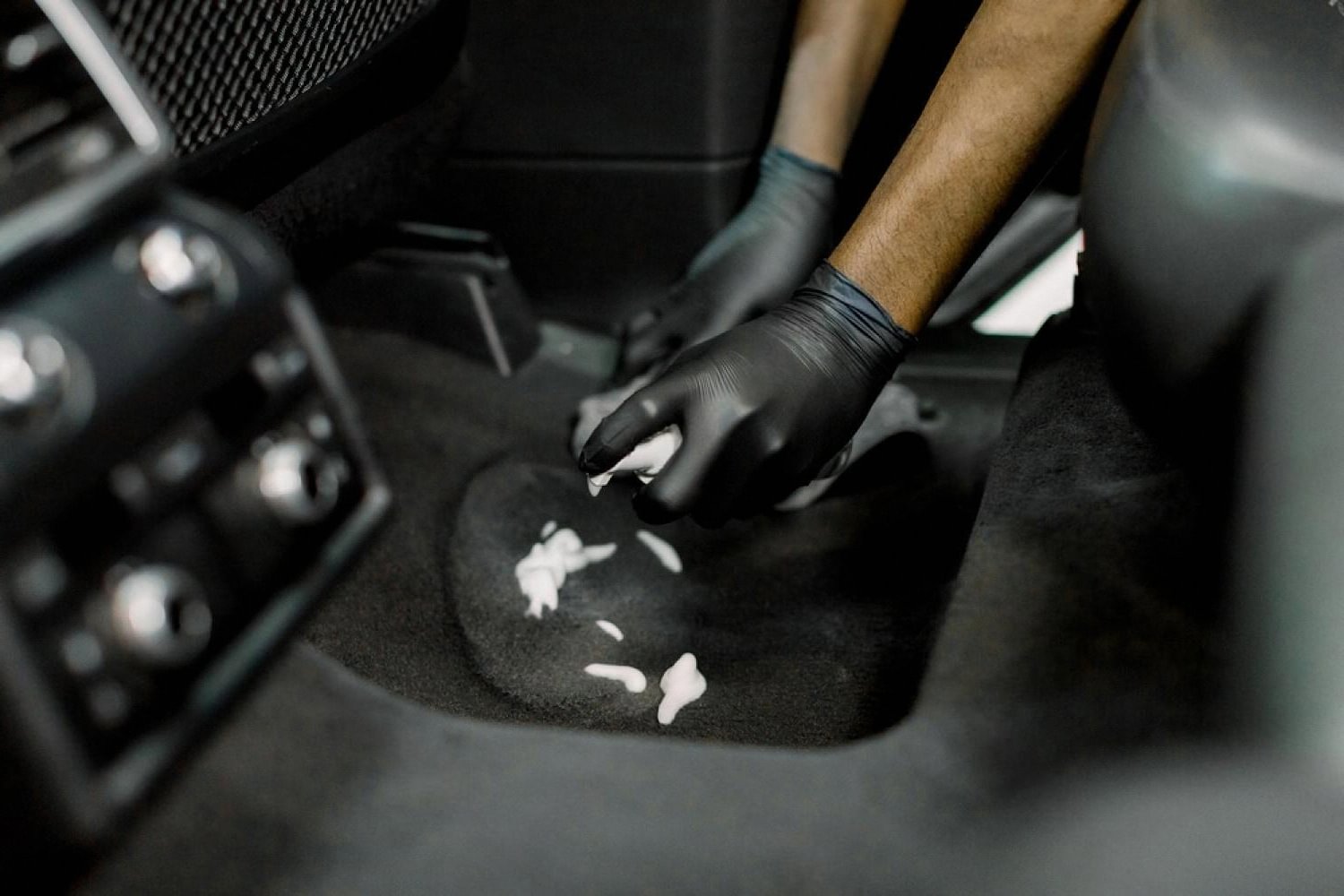
- Steam cleaning. High-temperature steam breaks down grease, kills most bacteria and dust mites, and lifts stains from fabric without soaking the padding.
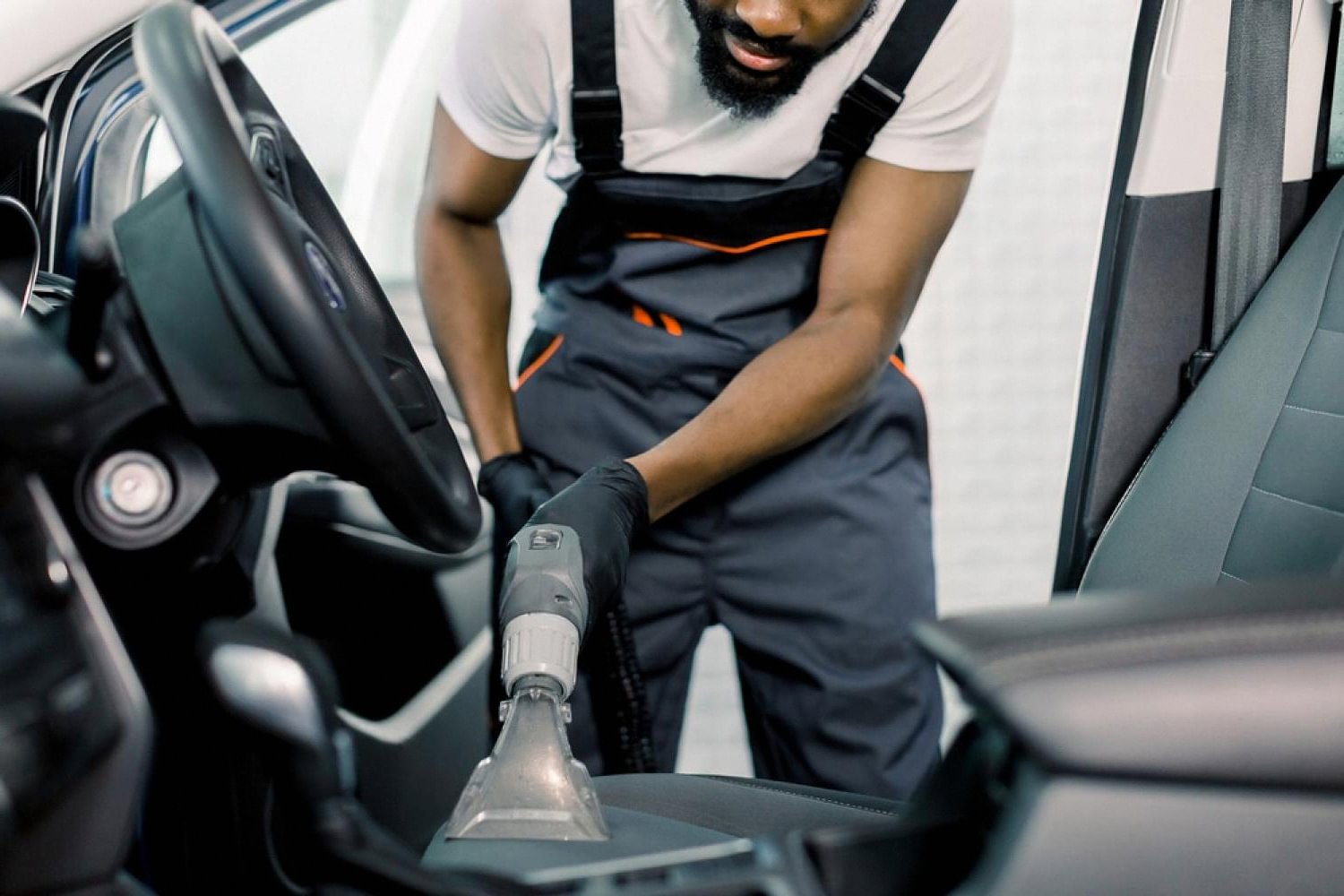
- Extraction. A wet-dry extractor pulls the loosened dirt and moisture back out, so nothing is left to grow mould underneath.
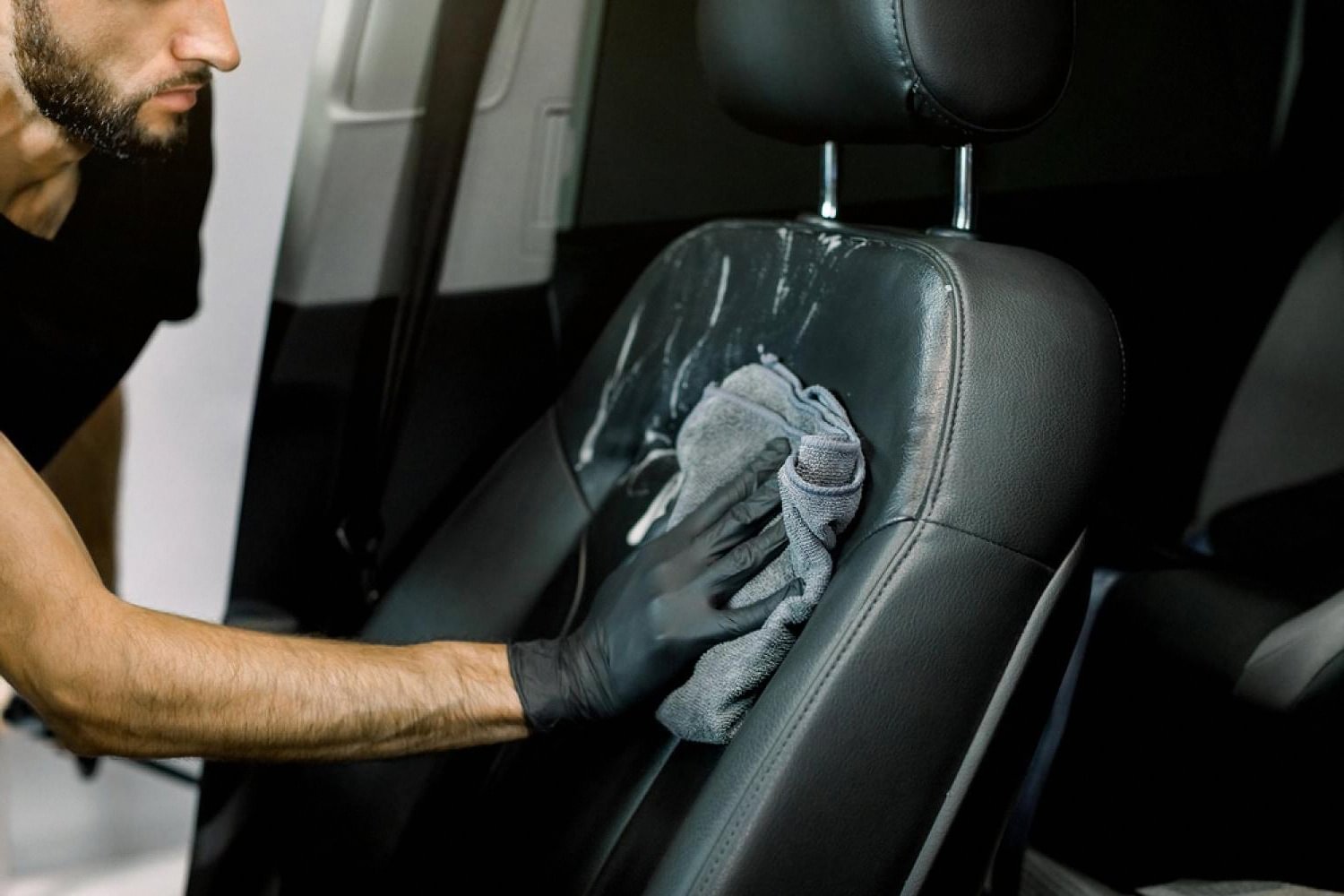
- Leather clean and condition. A pH-balanced cleaner followed by a conditioner that slows leather aging and cracking, both accelerated by UAE sun exposure.
- Odour removal, often with ozone. An ozone generator neutralises smoke, pet, and food odours at the molecular level rather than covering them with fragrance.
- Protective coatings. Fabric guard for seats, leather sealant for hides, and interior UV protection for the dashboard and door tops that take the worst of the sunlight.
Local tips before you book
- Book the first slot of the day in summer so the shop is not already backed up when your car arrives.
- Ask whether the AC evaporator is cleaned or just the cabin filter replaced, they are not the same job.
- Confirm ozone treatment is offered if you have had a smoker, a pet, or a spilled milk incident in the car.
- If you have young children, request fragrance-free finishing products, most shops will accommodate.
- For leather interiors, insist on conditioning after cleaning, otherwise the leather dries out faster in UAE heat.
- Take a short walkthrough with the technician before you leave, and note any pre-existing wear so nothing is disputed later.
- Plan a full interior detail every six months at minimum, quarterly if you have kids, pets, or a long daily commute.
A clean-looking cabin and a clean cabin are not the same thing. The first fools your eyes. The second protects your lungs, your children’s lungs, and the resale value of a car you probably paid a lot for. Choose the second.
Frequently asked questions
How often should I get my car interior professionally detailed in the UAE?
For most drivers in the UAE, a full interior detail every six months is a reasonable baseline. If you have children, pets, drive daily through heavy traffic, or take the car off-road on weekends, move to every three to four months.
The dust load in this region is higher than in most other climates, and the humidity along the coast accelerates mould growth inside the AC system, so intervals that would be fine in Europe are not enough here.
Is steam cleaning safe for leather seats?
Yes, when done by a trained detailer using controlled temperature and short dwell times. Steam loosens grime from the leather pores without soaking the material, and it kills most surface bacteria.
The important step is what follows: a proper leather conditioner. Without it, the cleaning process can leave the hide drier than before, which speeds up cracking in UAE sunlight.
What is ozone treatment, and do I need it?
Ozone treatment uses an ozone generator to fill the sealed cabin with O3 gas, which reacts with odour-causing molecules and neutralises them at the source rather than masking them.
You need it if the car has smelled like smoke, pets, spilled milk or food, or damp for more than a few days. A standard shampoo will not remove those odours from the headliner and padding, ozone will.
Can dirty car interiors really trigger asthma or allergies in children?
Yes. Dust mites, mould spores, pet dander, and pollen all accumulate in fabric seats, carpets, and the AC system. These are among the most common triggers for asthma attacks and allergic rhinitis, and children breathe more air per kilogram of body weight than adults do.
A car cabin is a small, sealed space. Whatever is trapped in the fabric is what your passengers inhale on every drive. Regular detailing physically removes those triggers.
What is interior UV protection and is it worth it in the UAE?
Interior UV protection is a coating or dressing applied to the dashboard, door tops, steering wheel, and other exposed plastics and leathers to block ultraviolet damage from sunlight.
In the UAE it is genuinely worth it. Uncoated dashboards start to fade, harden, and crack within a few years under direct sun. A good UV-blocking product slows that process significantly and helps preserve resale value.
How long does a full interior detailing session take?
A thorough job usually takes between three and six hours, depending on the size of the vehicle and the condition of the interior. A heavily soiled family SUV can take a full day.
Be cautious of any shop promising a complete interior detail in under 90 minutes. That is enough time for a vacuum and a wipe-down, but not for steam cleaning, extraction, leather conditioning, and proper drying.
Will detailing remove pet hair completely?
A good detailer will get 95 percent or more of the visible pet hair out using specialised rubber brushes, high-power extraction, and sometimes compressed air to lift embedded fibres out of the seats and carpet.
Some hair worked deep into carpet padding may resist even the best equipment. If you drive with pets regularly, seat covers and a boot liner between details will save you money and keep the interior in better shape.

Basketball fan, ramen eater, audiophile, Eames fan and typography affectionado. Doing at the junction of aesthetics and elegance to craft experiences both online and in real life. German award-winning designer raised in Austria & currently living in New York City.